Weekend Art Classes for Kids: What Parents Should Know
Weekend classes can sound automatically easier. No school pickup, no race against homework, no child arriving with half a snack still in hand. Then Saturday fills with errands, birthdays, family plans, and traffic, proving once again that the calendar has a personality.
The right weekend art class should create a repeatable pocket of creative time, not a new source of family stress. Before enrolling, decide whether your child needs continuity, flexibility, or simply a first experience with art outside school.
Choose between a connected program and a one-day class
A connected program is useful when you want learning to build over time. In Noljak Art, ideas can develop across a four-week structure. Children revisit observations, add skills, and expand an idea instead of starting from zero each session.
A one-day Art Open Class offers a different kind of value. Children can complete a project in one session, explore a particular medium, or join a monthly theme without the same long-term rhythm. It can be a gentle entry point for a hesitant child or a practical choice for families with changing weekends.
Check whether the schedule is truly sustainable
A class being available on the weekend does not mean every time slot will work. Consider wake-up patterns, meal times, travel, religious commitments, sports, and the child's energy after a full week.
The Rookids website currently lists its art programs as available every day, but families should confirm the latest weekend times before planning. Class schedules can change, and a quick check prevents the traditional parent ritual of arriving with confidence at the wrong hour.
Match the class length to the child
Younger children often do better with shorter sessions and clear transitions. Older or more experienced children may enjoy longer periods for painting, construction, or mixed-media work. The ideal duration is long enough for immersion but not so long that the last third becomes endurance training.
Ask how the class handles children who finish early, need a break, or take longer than expected. A good answer reveals whether the program is designed around real children or an idealized timetable.
Look for teaching, not template production
Weekend art should still be thoughtful. Observe whether the teacher explains materials, asks questions, and supports individual decisions. A relaxed class does not need to be an unstructured free-for-all, and a structured class does not need to produce identical work.
The best balance gives children enough guidance to learn something and enough agency to make the project theirs.
Prepare for a better first class
Confirm the current time, age group, duration, and materials included.
Ask whether a parent or guardian stays inside the room.
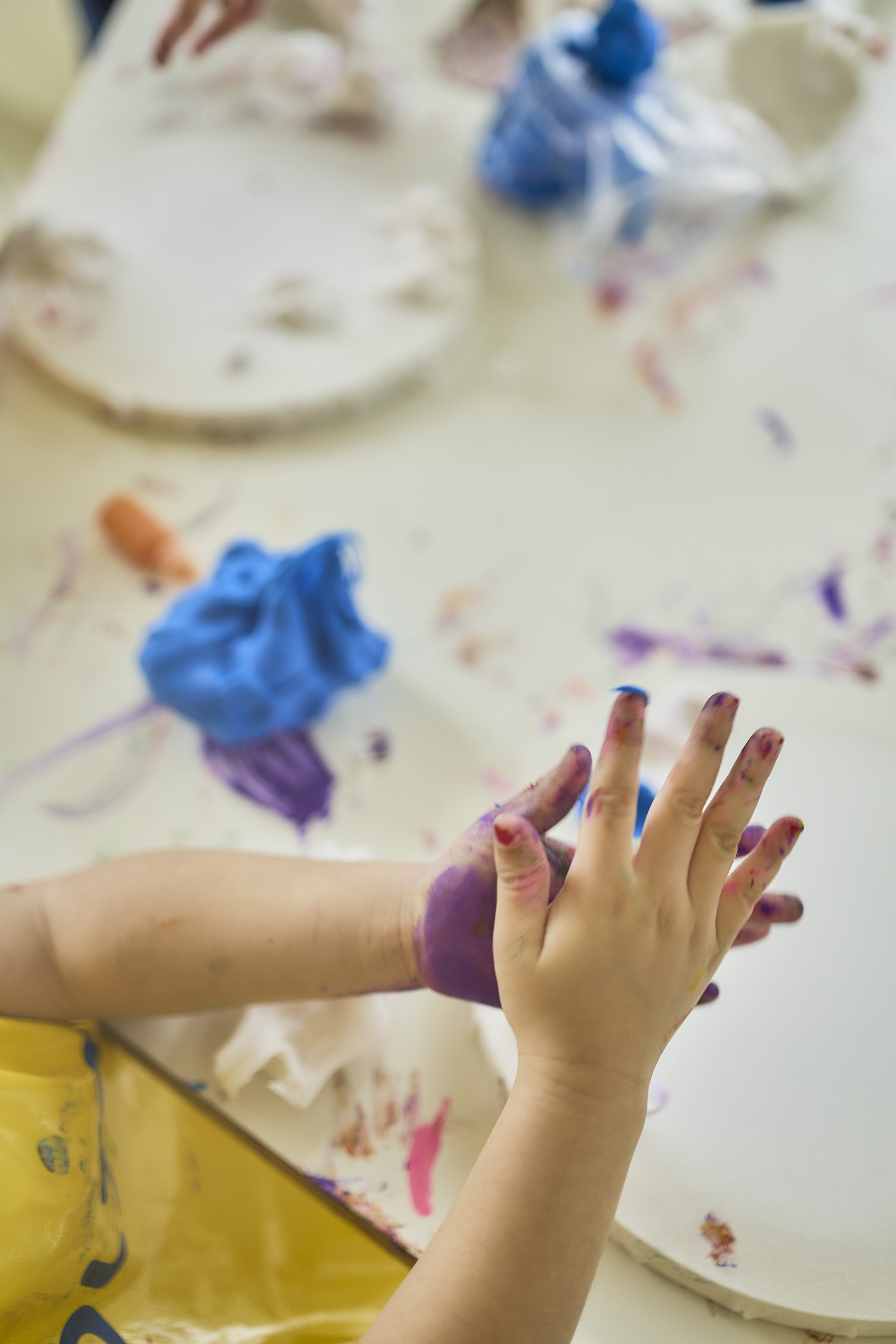
Choose comfortable clothes that can handle paint or glue.
Arrive early enough for your child to settle into the space.
Avoid promising that the class will be “easy” or that the artwork will look a certain way.
What should you ask your child afterward?
Skip “Was it fun?” as the only question. Children often answer yes or no and close the case. Ask which material they liked, what part felt difficult, what they noticed, or what they would make if they joined again.
A child does not need to declare a lifelong artistic calling after one Saturday. Curiosity is enough for the next step.
The right weekend art class fits two lives
It should fit the child's developmental needs and the family's actual routine. When both are respected, weekend art can become a small ritual that children anticipate, a place where time slows down and their ideas get to take up space.
READY TO EXPLORE? Looking for weekend art classes for kids in BGC? Check Rookids' current schedule and book a trial in Noljak Art, Baby Sensory Art, or an Art Open Class.