7 Things First-Time Moms Should Know About Raising Creative Kids
7 Things First-Time Moms Should Know About Raising Creative Kids
Motherhood comes with plenty of questions.
Is my child learning enough? Should they already know how to draw? Do I need to plan educational activities every afternoon? And why is there paint on the wall when the paper was right there?
When it comes to children and art, there is no perfect formula. You do not need to be an artist, own a beautifully organised craft cabinet, or turn every activity into a developmental milestone.
You simply need to give your child opportunities to explore.
Here are seven things every first-time mom should know about raising a creative child.
1. Your Child Does Not Need to Be “Good at Art”
Children do not need natural artistic talent before they begin creating.
Art is not an entrance exam. It is one of the ways children explore ideas, emotions, materials, and the world around them.
A child who fills a page with circles is still observing and making decisions. A child who paints the sky pink is not doing it incorrectly. They are learning that their imagination can exist outside the rules of everyday life.
The goal is not to discover whether your child is gifted. The goal is to let them discover what they enjoy.
2. The Process Matters More Than the Picture
Adults naturally look at the finished artwork. Children often care more about everything that happened while making it.
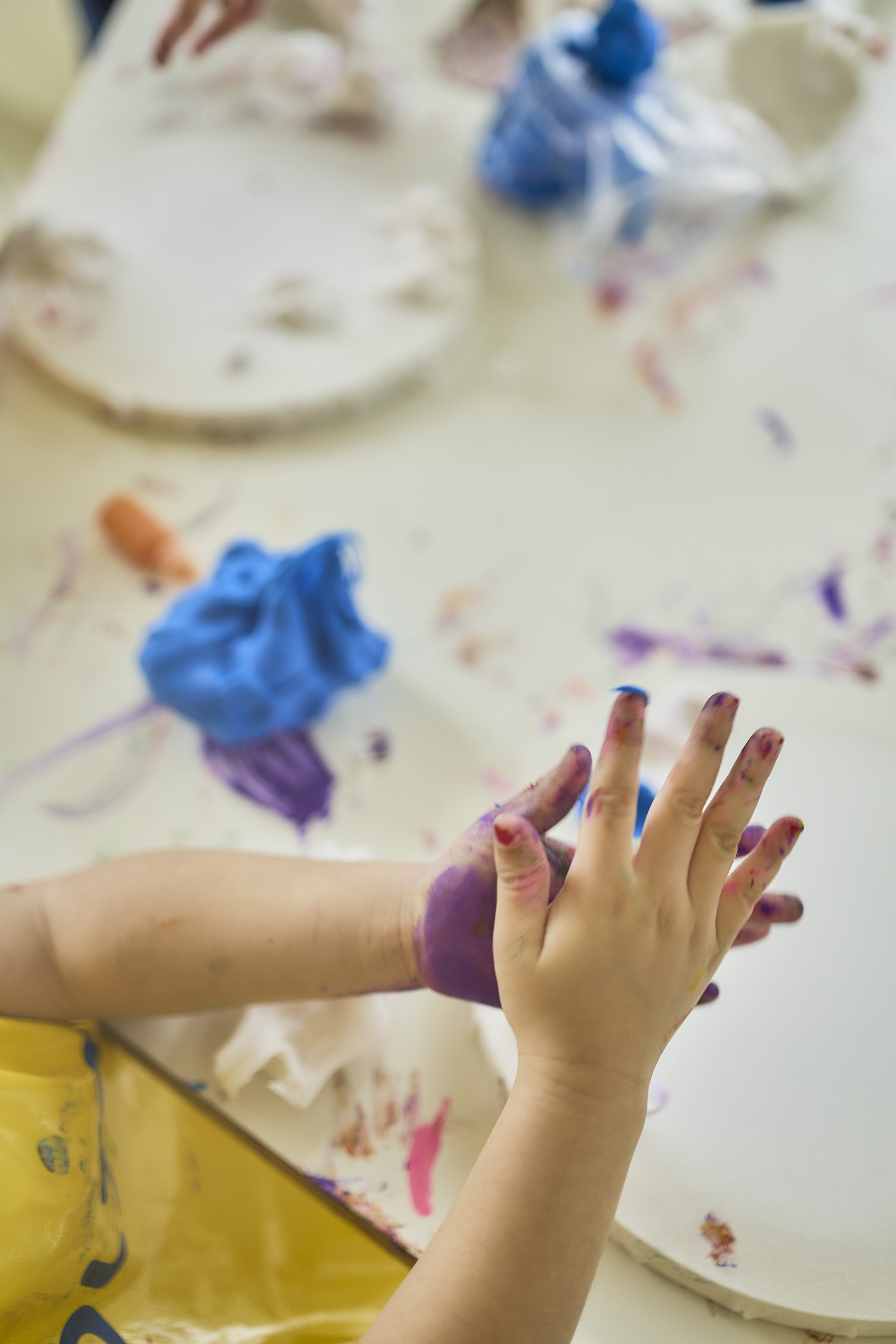
They remember mixing the colors, pressing their hands into clay, cutting the paper, or changing their original idea halfway through.
These moments give children opportunities to practise focus, decision-making, coordination, patience, and creative problem-solving.
The artwork may not always be refrigerator-worthy by adult standards. The experience still matters.
3. A Little Mess Can Be Part of Learning
Creative play can be messy, especially for younger children.
Paint spills. Crayons escape their containers. Tiny pieces of paper somehow migrate into every corner of the room.
This does not mean that all limits should disappear. Children can still learn to use materials properly and help clean up afterward. But if they are constantly worried about staying perfectly neat, they may become hesitant to experiment.
Prepare the space, choose washable materials, and accept a reasonable amount of chaos. Creativity has rarely been famous for keeping a spotless table.
4. Try Not to Correct Every Artistic Choice
It can be tempting to say, “Trees are green,” or “That is not how you draw a person.”
But when children are creating, frequent correction can teach them to doubt their ideas. They may begin looking to adults for approval before making every small decision.
Instead, try asking:
“Tell me about what you made.”
“Why did you choose that color?”
“What part did you enjoy making?”
“What would you add next?”
“How did you create that texture?”
These questions invite children to think and talk about their choices without suggesting that there is only one correct answer.
5. You Do Not Have to Entertain Your Child Constantly
First-time motherhood can make every quiet afternoon feel like something that needs to be filled.
It does not.
Children do not need a perfectly planned activity every hour. Boredom can sometimes lead them toward drawing, building, pretending, inventing stories, or finding new uses for familiar materials.
You can provide simple tools such as paper, crayons, recycled boxes, stickers, or child-safe clay. Then give them time to decide what to do.
Creativity needs guidance, but it also needs breathing room.
6. Avoid Comparing Their Work
It is easy to compare your child’s artwork with a sibling’s, classmate’s, or another child’s creation online.
Children develop skills at different speeds. One may enjoy drawing recognisable figures early, while another may be more interested in color, movement, stories, or three-dimensional materials.
Comparison can turn creativity into competition before children have even discovered what they love.
Notice your child’s progress instead. Maybe they are using materials more confidently, staying focused longer, or beginning to explain the stories behind their artwork. Those changes matter too.
7. The Right Art Class Should Protect Their Curiosity
A good children’s art class should teach skills without removing the child’s voice.
Look for a program that provides age-appropriate guidance, introduces different materials, and allows children to make individual choices. The goal should not be a classroom filled with identical outputs.
When comparing art classes for kids in BGC, ask whether the program values exploration, creative thinking, and the process behind each artwork.
Children should leave feeling curious and proud, not worried that their work looked different from everyone else’s.
There Is No Perfect Way to Raise a Creative Child
You do not need to know every art technique or prepare elaborate activities at home.
Let your child experiment. Listen when they explain their wonderfully strange drawings. Display the pieces they are proud of. Give them spaces where their ideas are welcomed and taken seriously.
Creativity is not another motherhood requirement to perfect. It is something you can discover alongside your child.
Rookids offers thoughtfully designed children’s art programs in BGC, including Noljak Art, a premium Korean art program that encourages observation, exploration, and independent thinking.
Location:
Rookids BGC
Unit 812, Alveo Park Triangle Tower, BGC, Taguig
Message Rookids to ask about suitable age groups, schedules, rates, and available art classes.
Suggested excerpt:
From embracing the mess to avoiding comparison, here are seven things first-time moms should know about helping children explore art and creativity.